I Held the Blue Cash Preferred for Four Years, Then Downgraded. Here's the Math.
After four years with the Blue Cash Preferred I downgraded to the free Blue Cash Everyday. The break-even is $3,167 a year in groceries, and my life stopped clearing it.

The short version first: after four years with the Amex Blue Cash Preferred, I downgraded back to the no-fee Blue Cash Everyday in mid-2023, and looking at the numbers now, I probably should have done it a year earlier. Nothing went wrong with the card. My spending just drifted away from the profile that made it worth a $95 annual fee.
I reviewed the Blue Cash Preferred back when I upgraded to it in 2019, and the logic at the time was straightforward: 6% back on groceries against a $95 fee. Card reviews rarely get follow-ups, though, so this is the part you don't usually see, the exit, with the actual math that drove it.
The Math That Decides It
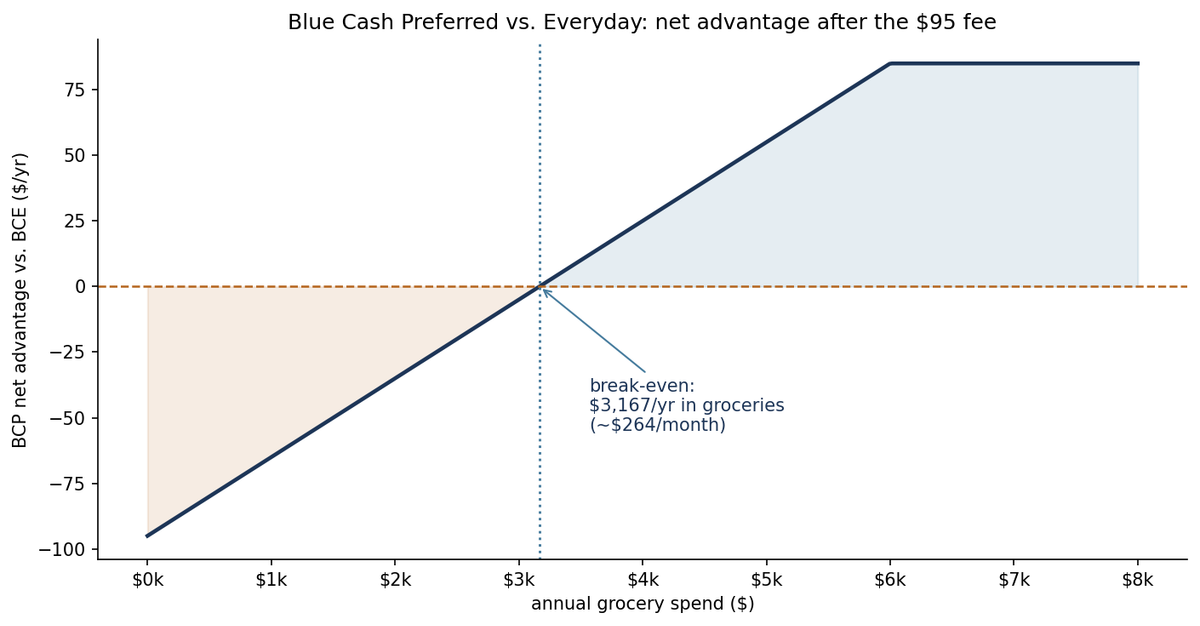
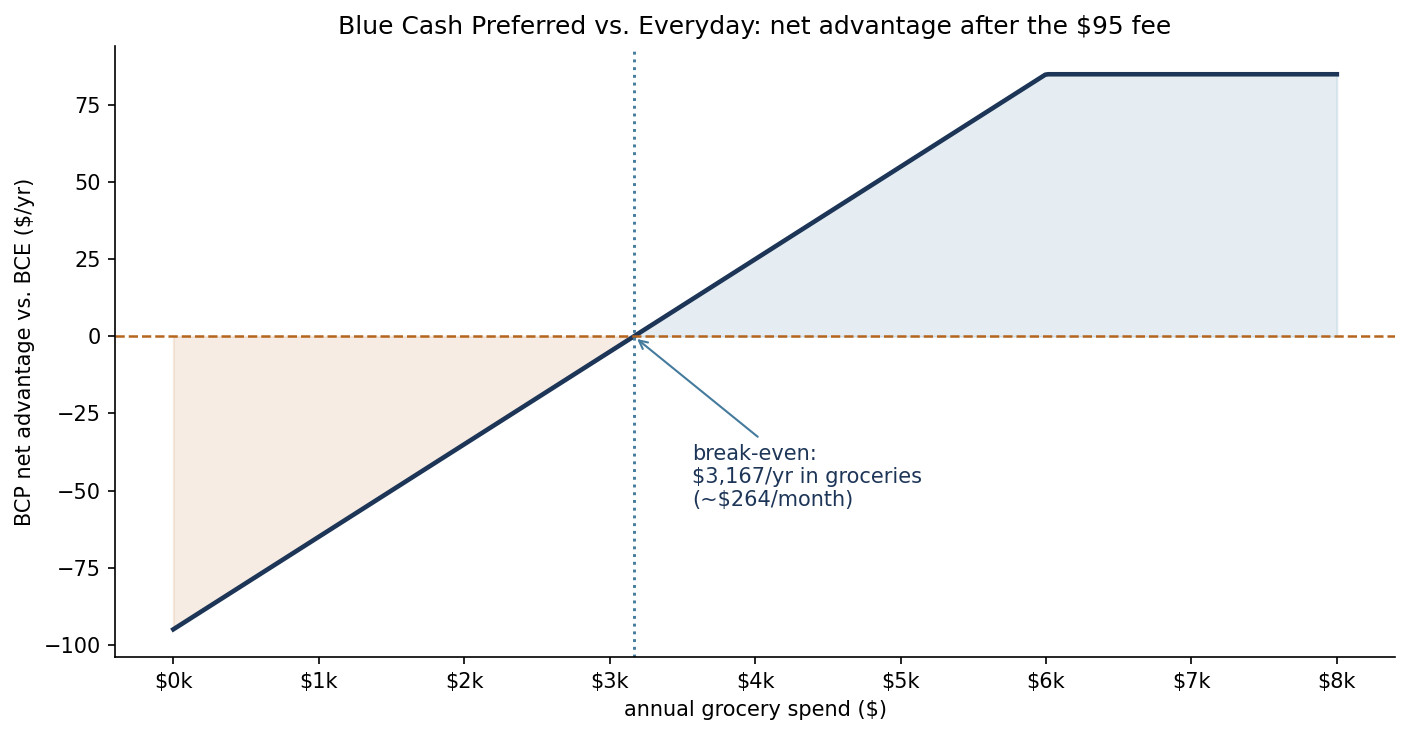
The comparison that matters isn't the Preferred against nothing. It's the Preferred against its own no-fee sibling, the Blue Cash Everyday, which pays 3% on groceries. Seen that way, the $95 fee buys you an incremental 3% on grocery spend, capped at $6,000 a year.
That makes the break-even easy to compute: $95 divided by 3% comes out to about $3,167 a year in groceries, or roughly $264 a month. Spend less than that and the fee eats the entire edge. Spend more and the card earns its keep, up to a maximum net advantage of about $85 a year once you hit the cap.
Why I Actually Left
I wasn't buying many groceries. Between eating out, travel, and a stretch of life that didn't involve a weekly supermarket run, my grocery spending hovered around the break-even line at best. In practice I was paying $95 a year to roughly tie a free card.
The annual fees were piling up. Individually, none of my card fees were unreasonable. Added together, I was paying more per year in fees than I was comfortable with at the time, and when I ranked the cards by how hard I had to work to justify them, the Preferred came out at the bottom of the list.
Other cards already covered groceries. By then my wallet included better grocery earners anyway. The Amex Gold was the big one: 4x on groceries in Membership Rewards points, and MR points have a high potential ceiling in value depending on how you redeem them. Next to that, the Preferred's headline category was mostly duplicate coverage. (This kind of overlap creeps up quietly as a card collection grows, and it is worth auditing for.)
The Downgrade, Not the Cancel
I product-changed to the Blue Cash Everyday rather than canceling outright. That preserved the account age for my credit history, dropped the fee to zero, and kept the 3% grocery rate that was effectively all I was using. Amex also prorated back part of the fee for the year, which was a nice touch I didn't expect.
These days the card serves as my fallback for online shopping. My primary online card is the Bank of America Customized Cash, which pays 3% on online purchases up to $2,500 of spend per quarter. When that quarterly allocation runs out, the Everyday steps in: it also pays 3% on U.S. online retail purchases, with its own cap of $6,000 a year. Between the two, my online spend rarely earns below 3%, and the fallback costs nothing to keep.
The Takeaway
An annual-fee card is a bet that your spending will keep matching its categories, and that bet needs re-checking every year, because the card's terms hold still while your habits don't. The useful comparison is always against the best no-fee alternative, not against nothing. I'll be applying the same incremental math to the rest of my wallet in future posts; if you want the foundations in the meantime, the Money and Mind series is the place to start.
Not financial advice; this is my personal experience and math. Rates and offers change, so verify current terms before making card decisions.