Chase Freedom Flex Review
From my Medium archive: rotating 5% categories, the Sapphire pairing that boosts every point, and what the no-fee math realistically returns.

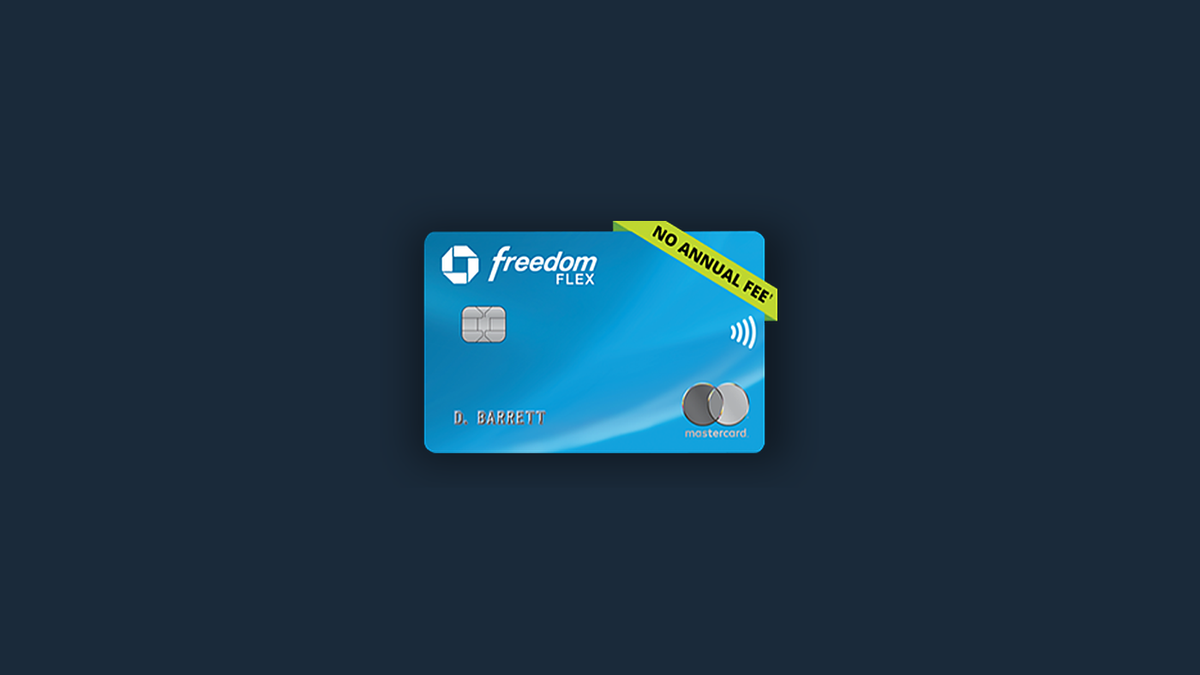
Where the card stands in August 2026: the current welcome offer is $200 after $500 of spend in the first 3 months, still with no annual fee. The structure reviewed below is intact: 5% rotating quarterly categories on up to $1,500 of combined spend, 5% on travel booked through Chase, and 3% on dining and drugstores.
This review comes from my Medium archive, originally published in August 2022. Offers, rates, and benefit values reflect that time, so verify current terms before applying. A 2026 update follows at the end.
The Chase Freedom Flex is a no-annual-fee card built for people willing to keep track of rotating rewards categories. The highlights at the time I reviewed it:
- $200 bonus on $500 of spending in the first 3 months, effectively 40% back
- 5% back on gas stations for the first year, on up to $6,000 of spend
- 5% back in quarterly rotating categories, on up to $1,500 of combined purchases per quarter
- 5% on travel booked through Chase Ultimate Rewards, 3% on dining, eligible delivery, and drugstores
- No annual fee
How the Rotating Categories Work
The core draw is the quarterly 5% categories, which in 2022 covered grocery stores, eBay, Amazon, streaming, and gas stations among others. The 5% applies to the first $1,500 of combined category spend each quarter, which caps the reward at $75 per quarter.
Chase requires activating the category each quarter, a straightforward log-in-and-click, but it doesn't turn on by itself. It's worth setting a recurring reminder every three months so you don't miss the window and fall back to the base rate for that quarter. That small bit of maintenance is the difference between a useful card and a mediocre 1% card.
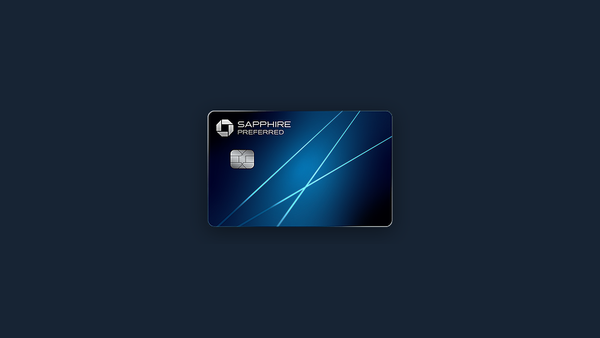
Rewards arrive as Ultimate Rewards points. I value them conservatively at 1 cent each, while third-party point valuations often run higher depending on the redemption method. Pairing this card with a Chase Sapphire Preferred can make those same points more valuable for travel redemptions, though the exact uplift now depends on current Sapphire redemption rules.
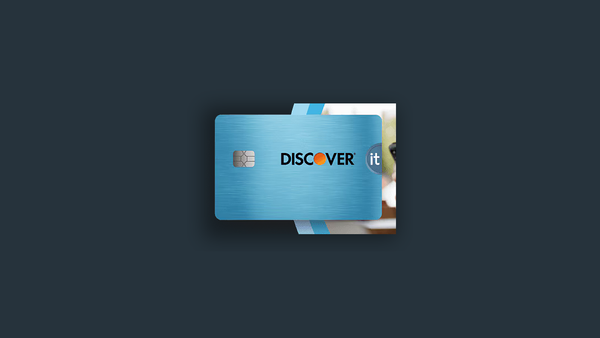
My favorite pairing move is running it alongside the Discover It, the other rotating-category card in my wallet, so more of the year has some category paying 5%. A few habits make it easier to actually capture that:
- Set a recurring reminder for the first week of each quarter. Activation is manual, and missing the window means falling back to the base rate on that category for the whole quarter.
- Rename the card in your mobile wallet, Apple Pay or Google Pay, to whichever category's active, like Freedom Flex: Gas or Freedom Flex: Groceries. That way you can see at a glance which card in your wallet is the active 5% earner without checking the app.
- If it's a dedicated card just for the rotating categories, not your everyday spend card, tracking progress against the $1,500 quarterly cap is easy: the statement balance is basically the category spend total.
Beyond the Rotations
The fixed categories make the card useful even in an off quarter: 5% on travel booked through Chase Ultimate Rewards, 3% on dining and takeout, and 3% at drugstores. Those categories make it a reasonable general-use card rather than a pure category chaser.
The Value Math
The archived signup bonus was $200 on minimal spend. The first-year gas promotion was also well timed for 2022. Using a rough $5,000 household gasoline-spend assumption, 5% back would net about $250.
Maxing out the rotating categories means hitting the full $1,500 cap in all four quarters, $6,000 of categorized spend for the year, which works out to $300 in cash back. That's the ceiling for perfectly optimal use. In my original rough math, the fixed categories added an estimated $220 on travel, using $4,400 of vacation spend, plus about $71 on dining, using $2,375 of dining and takeout spend. Some of that can double-count when quarterly categories overlap dining or travel, so I'd treat the total as an upper-bound illustration rather than a prediction.
Stacking every archived benefit worked out to roughly $1,041 of first-year value on a card that costs nothing to hold. Realistically, my own experience ran closer to the $200 bonus plus about $200 a year in cashback, which is still a strong return for a no-fee card.
The Verdict
The Freedom Flex takes some organization: category calendars, activation clicks, and a habit of remembering which card to pull out. For people willing to do that, the 5% categories are unusually strong, and for everyone else the fixed travel and dining categories still carry the card.
The standard cautions apply, including a hard inquiry and Chase's 5/24 rule. Approval odds are generally strongest for applicants with good to excellent credit. If you're earlier in that process, start with the credit-building fundamentals.
2026 Update
A confession that makes this review more honest rather than less: my own rotating Chase card is the original Freedom, the Flex's predecessor, opened in 2017 and still running the same quarterly 5% category structure today. Chase closed the original Freedom to new applicants in 2020, and the Flex carries the structure forward.
The pairing strategy above isn't theoretical either. Each quarter I activate both this and the Discover categories and log them in a spreadsheet, so the two cards cover as much of the year as possible.
The first-year gas promotion was a 2022 artifact and is long gone, but the core of the card is still recognizable in 2026: 5% rotating categories capped at $1,500 a quarter, 5% portal travel, 3% dining and drugstores, and no annual fee. Points still pool with a Sapphire, though Chase's 2025 changes to Sapphire redemptions affect what the boost is worth. I currently hold about 45,000 Ultimate Rewards points earned largely through these rotations.