Discover It Review
From my Medium archive: rotating 5% categories, statement-credit simplicity, and the first-year match that turns 5% into 10%.

Where the card stands in August 2026: the headline offer remains the first-year unlimited Cashback Match, which doubles everything you earn in year one, with the same no-fee 5% rotating categories on up to $1,500 per quarter reviewed below. Fixed-dollar signup bonuses like the $100 in this review come and go; the Match is the durable draw.
This review comes from my Medium archive, originally published in September 2022. Offers, rates, and benefit values reflect that time, so verify current terms before applying. A 2026 update follows at the end.
The Discover It's a no-annual-fee card whose value depends almost entirely on how organized you are. The highlights at the time I reviewed it:
- $100 bonus after a single purchase in the first 3 months
- Unlimited cashback match at the end of the first year, which doubles everything earned
- 5% back in quarterly rotating categories, on up to $1,500 of purchases per quarter
- 1% on everything else
- No annual fee
How It Works
The draw is the rotating 5% categories, which in 2022 covered grocery stores, Target, gas stations, restaurants, PayPal, and Amazon among others. Rewards arrive as statement credits rather than points, and there's a real appeal in that simplicity: it's a straight discount on the bill, with no valuation debates involved.
The 5% applies to the first $1,500 of category spend per quarter, capping the reward at $75 a quarter. Each quarter's category needs manual activation by the cardholder, it doesn't turn on by itself, so it's worth setting a recurring reminder every three months to flip it on before you start spending.
Everything outside the category earns 1%, which isn't the point of the card. Spend that doesn't fit the current category belongs on a better everyday earner, and it's probably optimal to have that everyday card in place before adding a rotating-category card at all.
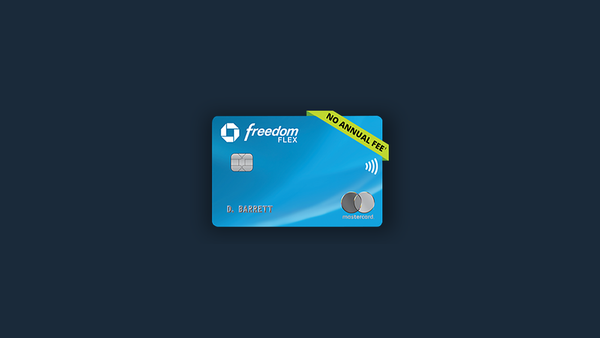
My favorite move is pairing it with the Chase Freedom Flex, the other rotating 5% card in my wallet, so more of the year has some category paying 5%. A few habits make it easier to actually capture that:
- Set a recurring reminder for the first week of each quarter. Activation is manual, and missing the window means falling back to 1% on that category for the whole quarter.
- Rename the card in your mobile wallet, Apple Pay or Google Pay, to the current category, like Discover: Groceries. That way you can see at a glance which card in your wallet is the active 5% earner without checking the app.
- A small physical label on the card itself does the same job for anyone still swiping plastic.
- If it's a dedicated card just for the rotating categories, not your everyday spend card, tracking progress against the $1,500 quarterly cap is easy: the statement balance is basically the category spend total.
The First-Year Match
The feature that separates the Discover It from most rotating-category cards is the first-year cashback match. At the end of the first year, Discover matches everything earned, which effectively turns the 5% categories into 10% for the entire first year.
That rate's unusually strong on a no-fee card, but it's still capped by the rotating-category calendar and by how much spending you can naturally place in those categories.
The Value Math
The $100 bonus required only a single purchase in 2022, which made it one of the easier signup bonuses around at the time. Most comparable cards asked for hundreds or thousands of dollars of spend.
Maxing out the quarterly categories means hitting the full $1,500 cap in all four quarters, $6,000 of categorized spend for the year, which works out to $300 in cash back. That's the ceiling for perfectly optimal use. The first-year match doubles it to $600. With the archived $100 bonus included, the fully-maximized first year came to about $700 of value on a free card.
My own experience ran closer to $100 a year in category cashback, which the match still doubled. That's a better picture of the card for me: not a life-changing rewards engine, but a simple, durable 5% tool.
The Verdict
The Discover It isn't for the unorganized, since its premium sits inside categories that change every quarter and require activation. For people willing to stay on top of it, 5% with no annual fee is still hard to argue against, and the first-year match makes the first year better.
It's a great starter card for exactly that reason: no fee, real cash back, and a forgiving bonus to earn while you're building out a wallet. Its marginal value fades over time, though, as higher-value rewards cards start overlapping its category coverage. Once a travel or dining card already earns 3-4x in the same buckets, the Discover It's 5% edge shrinks down to whatever categories nothing else covers well.
Approval odds are generally strongest for applicants with good to excellent credit. If that's still in progress, the credit-building guide is the place to start.
2026 Update
This is my longest-held card. I opened it as the student version in September 2016, and it's still in my wallet nearly a decade later. The credit line grew from a student-sized limit to $12,500 along the way, which is one of the quieter benefits of keeping an old no-fee card alive, since that aging account props up my credit history. My cashback match year was 2017, and it paid out as advertised.
Two things have changed since 2022. Discover's now part of Capital One after the acquisition closed in 2025, and current application-page language may differ from the archived $100-bonus version above. Before applying, I'd check the current offer page and the current quarterly category calendar directly.
The habit this card started turned into a system. I've logged every credit card redemption since 2017, and the tracked all-time value across my wallet passed $16,700 this year. This card was the first entry in that ledger.